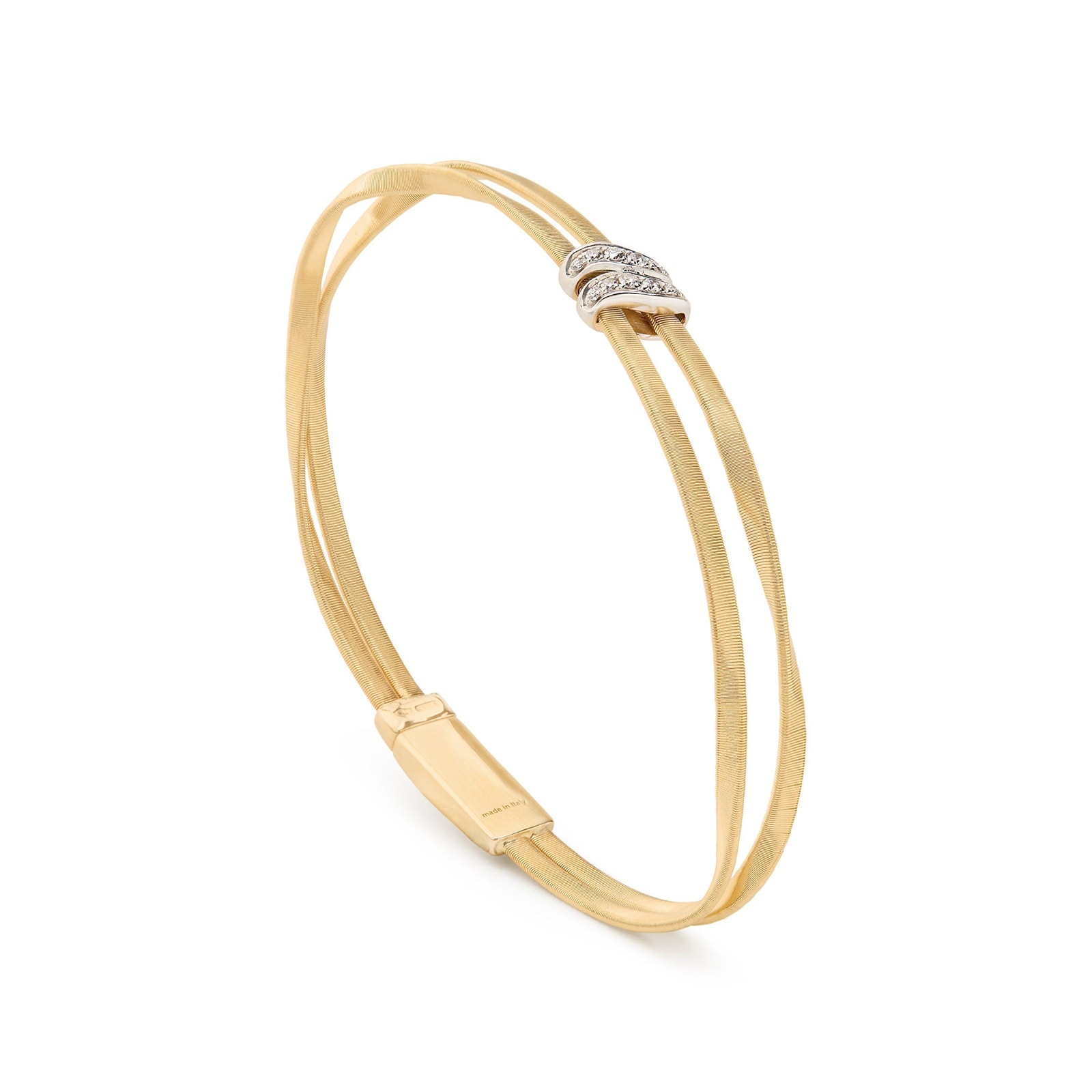

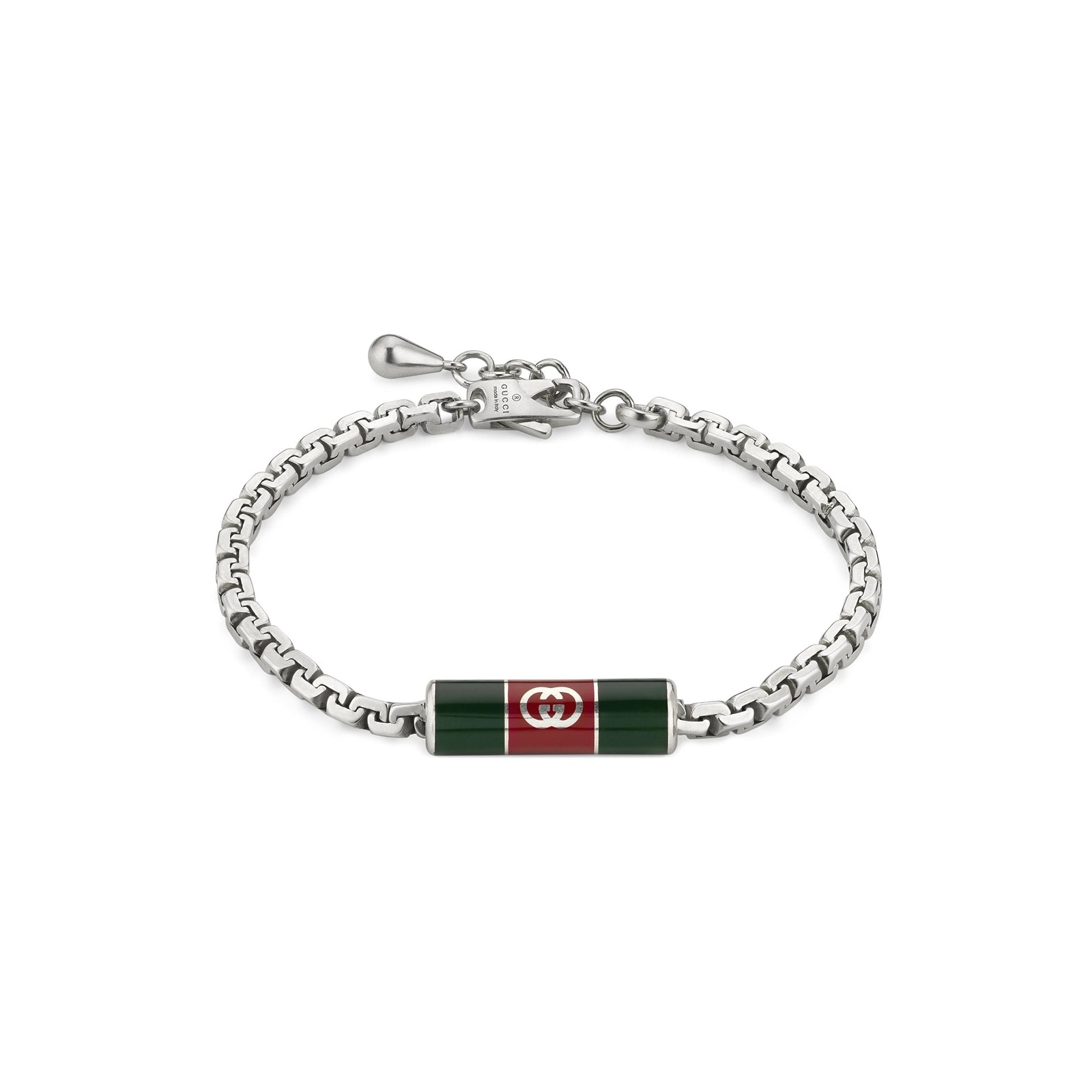
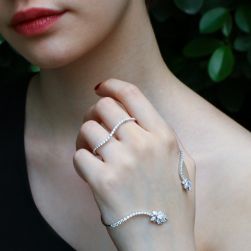
Across premier jewelry districts and wholesale exchanges, the resurgence of vintage diamond wedding bands has reshaped how couples approach bridal commissions. In 2026, a growing share of discerning buyers reject mass-produced eternity bands in favor of hand-fabricated replicas of Edwardian, Art Deco, and Victorian originals, or period-authentic restorations sourced from estate inventories. This guide dissects the full bespoke journey—from loose stone selection and 3D CAD modeling through casting, setting, and final GIA verification—with the pricing transparency and metallurgical rigor that top-tier showrooms expect. Whether you are commissioning a single heirloom or vetting a dealer's certified Bracelets showroom inventory for a matching suite, the principles below will protect your capital and your design intent. For exquisite artisan craftsmanship and certified stone settings, examine this handcrafted Certified Diamond Heart Chain Brace.
Market Landscape & Industry Realities for vintage diamond wedding bands
Historical provenance commands a measurable premium in 2026. Estate and period-authentic vintage diamond wedding bands—particularly those with old European cut (OEC) or old mine cut (OMC) stones—trade at 15% to 40% above comparable modern brilliant-cut bands when the setting carries documented age and original milgrain detail. The economics are straightforward: OEC and OMC diamonds were cut by hand before the 1919 Tolkowsky mathematical model, yielding chunky facets and warm, candle-like scintillation that modern laser cutting cannot replicate. Supply is finite, and demand from younger buyers raised on fast fashion has paradoxically increased appetite for genuine antique character.
Wholesale diamond premiums typically range from 8% to 22% over Rapaport baseline for certified vintage-cut stones in the 0.50 to 1.50 carat range, with the spread widening sharply above 2.00 carats due to scarcity. Custom CAD replication of an antique band—where a jeweler scans a period original and 3D-prints a wax or resin model—has democratized access, but it has also flooded the market with "vintage-style" bands that lack the metallurgical integrity of hand-fabricated originals. Serious buyers must distinguish between three categories: genuine antique bands, period-authentic restorations (original stones reset into new hand-fabricated mounts), and modern vintage-inspired CAD pieces. Each carries a different valuation trajectory and insurance requirement.
New York's 47th Street corridor remains the gravitational center of the U.S. trade, but national buyers now access comparable wholesale pricing through verified online showrooms and regional exchanges in Los Angeles, Chicago, and Miami. The key market reality for 2026: the premium for hand-fabrication is shrinking as CAD and casting technology improves, yet the premium for documented antique provenance is expanding. Buyers who understand this bifurcation can commission a period-authentic band at 30% to 50% below the cost of an original antique of equal stone quality.
The 4Cs, Sourcing & Pricing Benchmarks for vintage diamond wedding bands
Independent gemological laboratories like GIA and IGI classify cut grade as the single greatest determinant of value in modern brilliants, but for vintage diamond wedding bands the calculus shifts. In OEC and OMC stones, cut grade is often absent from older certificates, and buyers must rely on facet pattern analysis, culet size, and girdle thickness to assess light performance. A well-proportioned OEC with a small culet and medium girdle can outperform a poorly cut modern brilliant in visual fire, even if its certificate lacks a cut grade.
Color and clarity tolerances also differ. Vintage bands frequently feature stones in the H–J color range and VS2–SI1 clarity, because antique cutters prioritized weight retention over color purity and often left small inclusions near the girdle. A GIA-certified H/VS2 OEC in a hand-fabricated platinum band represents the sweet spot for value in 2026—visually clean to the naked eye, warm enough to suit antique character, and priced 20% to 35% below an equivalent modern round brilliant.
| Carat Tier (Total Weight) | Typical Vintage Cut (OEC/OMC) | Wholesale Price Range (2026) | Retail Showroom Range | Value Notes |
|---|---|---|---|---|
| 0.50–0.99 ct | H–J / VS2–SI1 | $1,800–$4,200 | $3,200–$6,800 | Best entry point; high liquidity |
| 1.00–1.49 ct | G–I / VS1–SI1 | $4,500–$9,800 | $7,500–$15,500 | Sweet spot for custom CAD commissions |
| 1.50–1.99 ct | F–H / VS1–VS2 | $9,500–$18,000 | $16,000–$28,000 | Scarcity premium begins |
| 2.00–2.99 ct | E–G / VVS2–VS1 | $18,500–$38,000 | $30,000–$58,000 | Collector tier; appraisal critical |
| 3.00+ ct | D–F / VVS1–VS2 | $42,000–$95,000+ | $68,000–$150,000+ | Auction-grade; provenance matters |
Always inspect the pavilion depth and table percentage under a 10x loupe before committing to a vintage stone, because OEC cutters frequently exceeded 65% depth, which can create dark centers if the stone is set too low. Buyers who explore our curated Bracelets collection will notice that vintage-cut stones in matching suites command a 10% to 15% premium over single stones—a critical consideration if you plan to pair a wedding band with an existing engagement ring.
Metal Alloy & Setting Cost Comparison
| Metal | Purity / Alloy | Cost per Gram (2026) | Durability | Best Use in Vintage Bands |
|---|---|---|---|---|
| Platinum | 950 (5% Ruthenium/Iridium) | $38–$52 | Excellent; develops patina | Bezel and milgrain-heavy Deco designs |
| 18K White Gold | 750 (Palladium or Nickel) | $42–$58 | Very good; requires rhodium | Prong-set OEC solitaires |
| 18K Yellow Gold | 750 (Copper/Silver) | $40–$55 | Good; softer alloy | Victorian and Edwardian replicas |
| 14K White Gold | 585 (Palladium) | $28–$38 | Very good; budget-friendly | Everyday-wear eternity bands |
| 14K Rose Gold | 585 (Copper-rich) | $26–$36 | Good; color-stable | Art Deco geometric patterns |
Premier Showroom Selection & Merchant Vetting for vintage diamond wedding bands
Storefront overhead directly affects the final price of vintage diamond wedding bands, and the spread between wholesale and retail can exceed 100% in high-rent corridors. A band that wholesales for $6,500 on 47th Street may retail for $13,000 in a Madison Avenue salon—same stones, same fabrication, different rent. Buyers who understand this arbitrage can negotiate 15% to 25% off retail by presenting a verified wholesale benchmark and committing to a custom CAD commission rather than an off-the-shelf piece.
Vetting a merchant begins with certification transparency. Request the GIA or IGI report number for every stone above 0.50 carat, and verify the laser inscription under magnification before payment. Reputable dealers will provide a verified Bracelets valuation report that breaks down stone cost, metal weight, labor, and setting fees—a document that doubles as negotiation leverage and insurance documentation. Avoid dealers who refuse to itemize or who present only a single "appraisal" without laboratory backing.
Negotiation protocols for custom vintage commissions differ from off-the-shelf purchases. Because the band does not yet exist, you are negotiating labor and CAD fees, not inventory carrying costs. Expect to pay $800 to $2,500 for CAD modeling and wax printing on a complex milgrain or filigree design, and $1,200 to $3,500 for hand-fabrication labor depending on complexity. Ask for a fixed-price contract that separates stone cost, metal cost, CAD fee, and setting labor—this prevents mid-project upcharges and gives you a clean basis for insurance appraisal.
"The single most reliable vetting question in the Diamond District is not 'Is this a good deal?' but 'Can you show me the GIA report and the metal hallmark side by side?' Dealers